UX research learnings
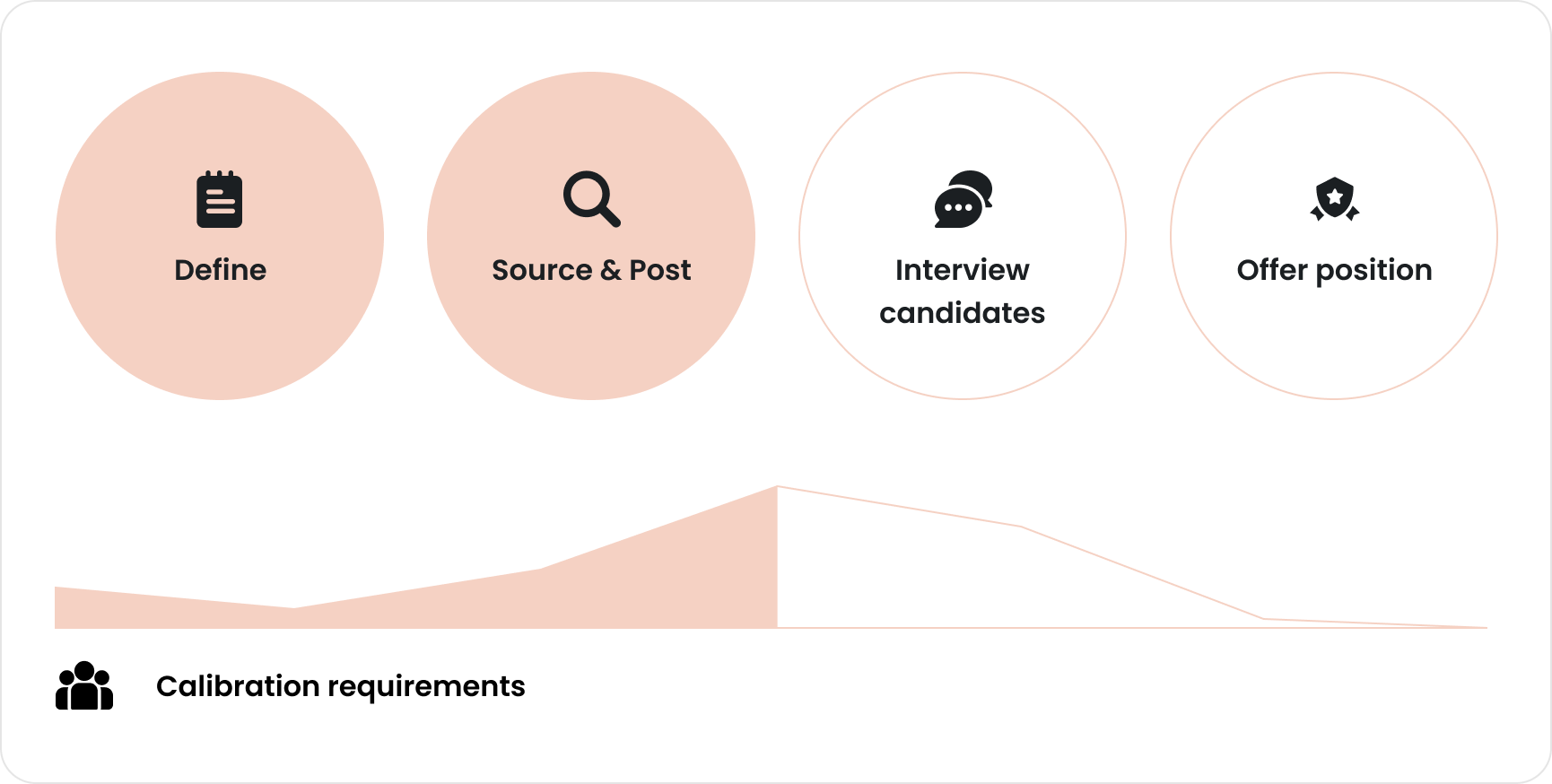
Existing Framework: “4 Stages of Hiring”
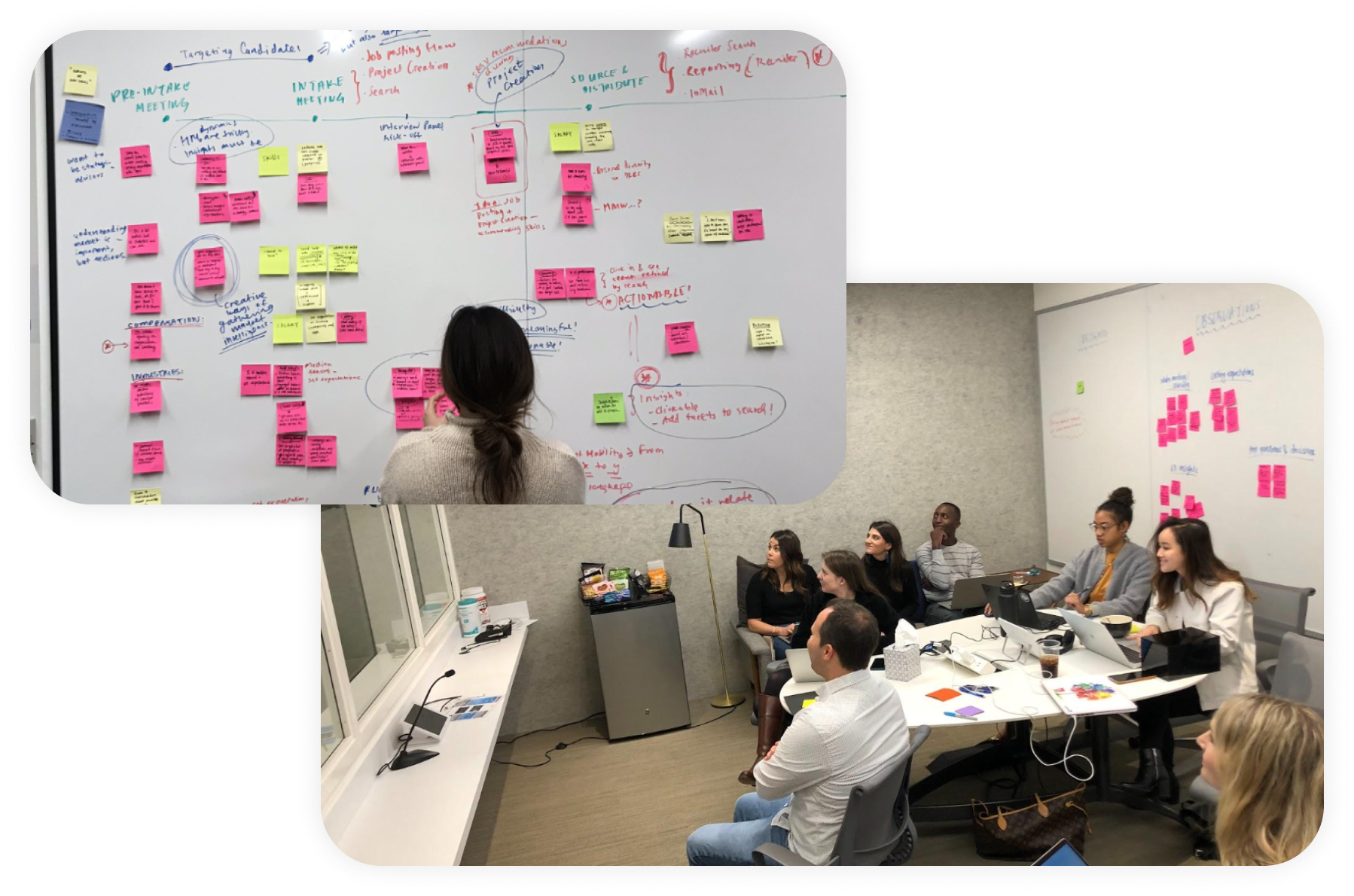
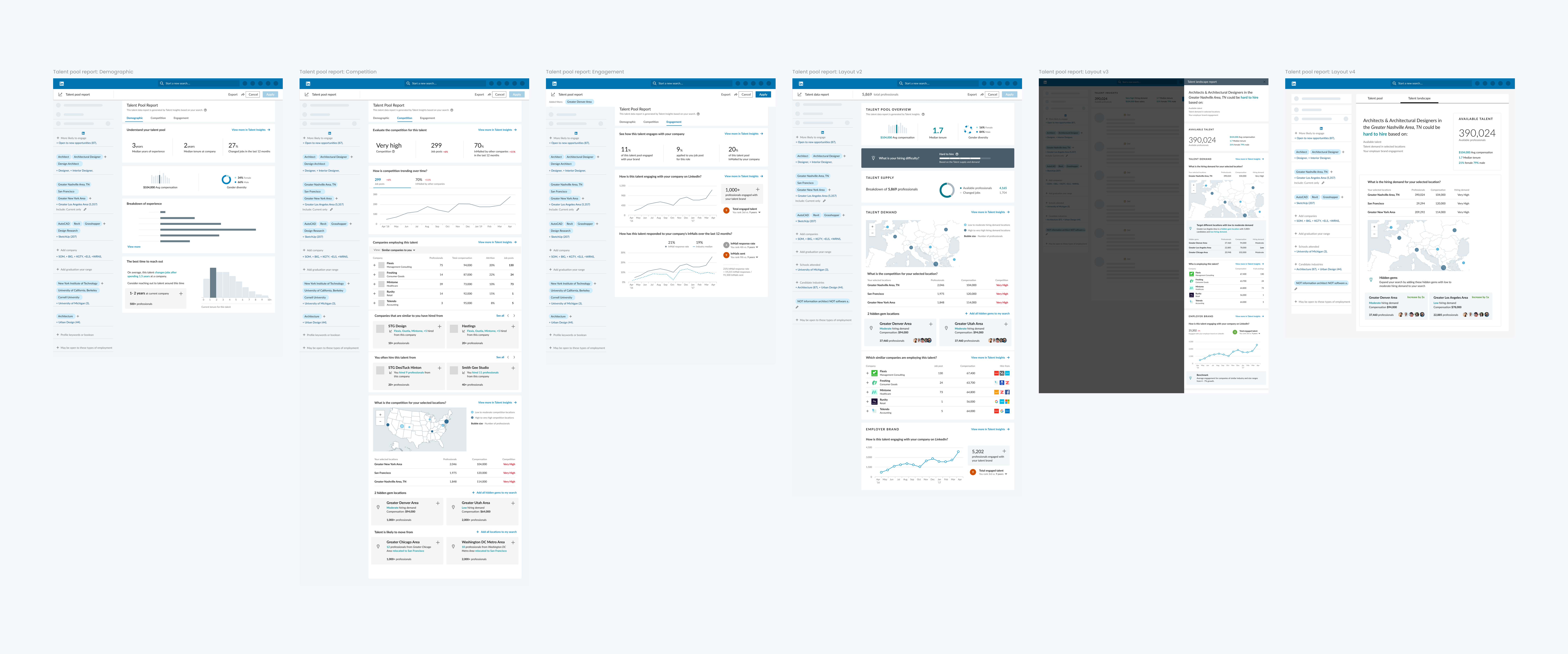
Using the existing framework that the LinkedIn Talent Solutions Design team created based on a series of UXR research studies, we decided to focus on the first 2 phases of hiring: “Define” and “Source & Post”.
Within these phases we defined 6 primary tasks in which data and insights can help Recruiters:
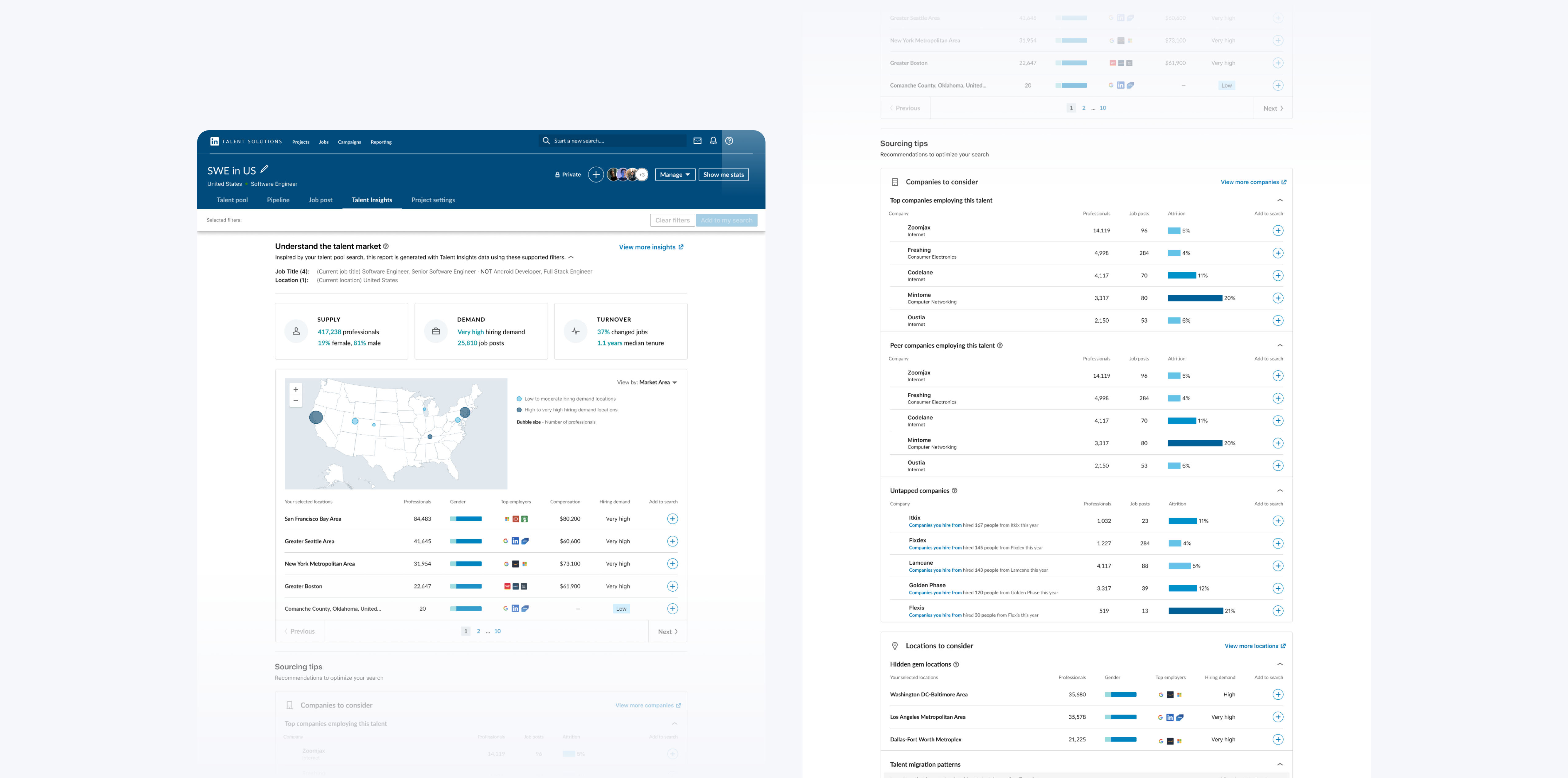
Learn: Learn about the role, the market landscape - who are the top players? Major Competitors? Role requirements and relevant skills.
Set hiring strategy: Iterate on hiring strategy and expectations. Decide on sourcing approach -- who (job titles and companies), what (skills, backgrounds, experiences), and where?
Source: Look for candidates on Recruiter, InMail outreach to candidates, and share profiles with hiring manager.
Post: Seek active talent through job postings and other “active” methods.
Manage & Prioritize: Juggle open roles and manage hiring team to work faster and more effectively.
Reflect: Think about how the process is going and for areas of improvement.
In which of these tasks do data and insights have the most opportunity for impact? From the user research, we concluded that LTI data and insights have the most potential for impact in the first two tasks - Learn and Set Hiring Strategy.
Task 1: Learn
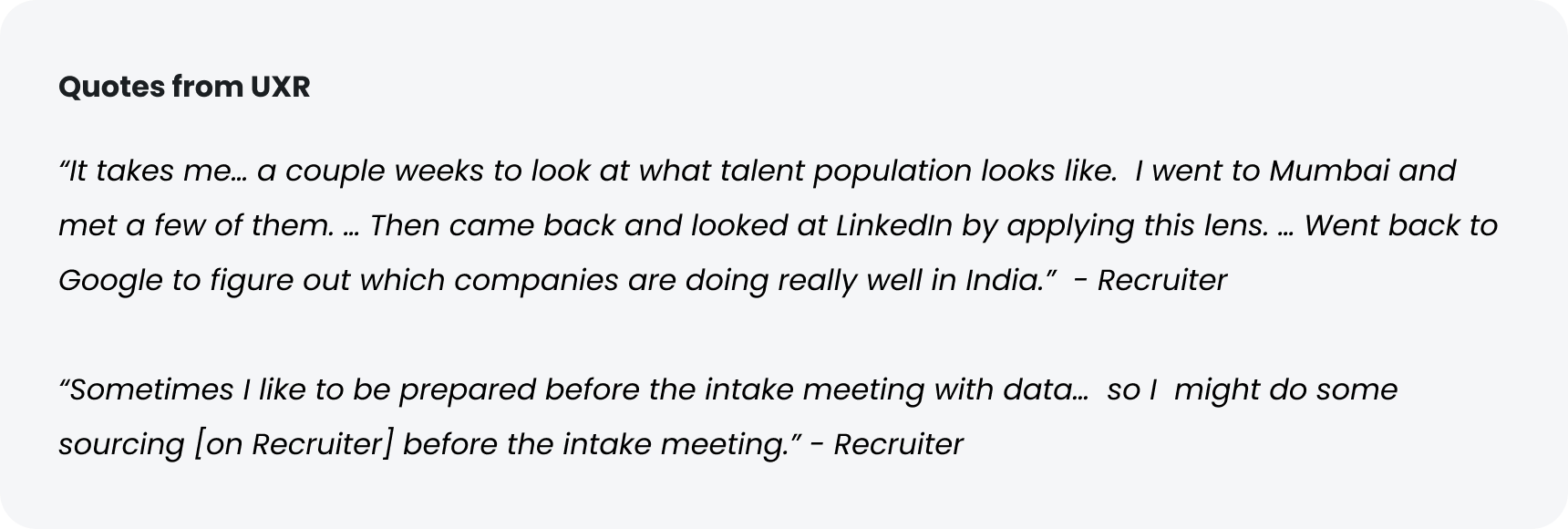
Pain point: Participants are learning about the talent landscape for a new role through long-winded, creative methods. This can be cumbersome.
The recruiter’s goals for “Learn”:
Getting up-to-speed on the overall market through time-consuming, ad-hoc ways
Understanding competitive landscape and who the key players and companies are
Task 2: Set strategy
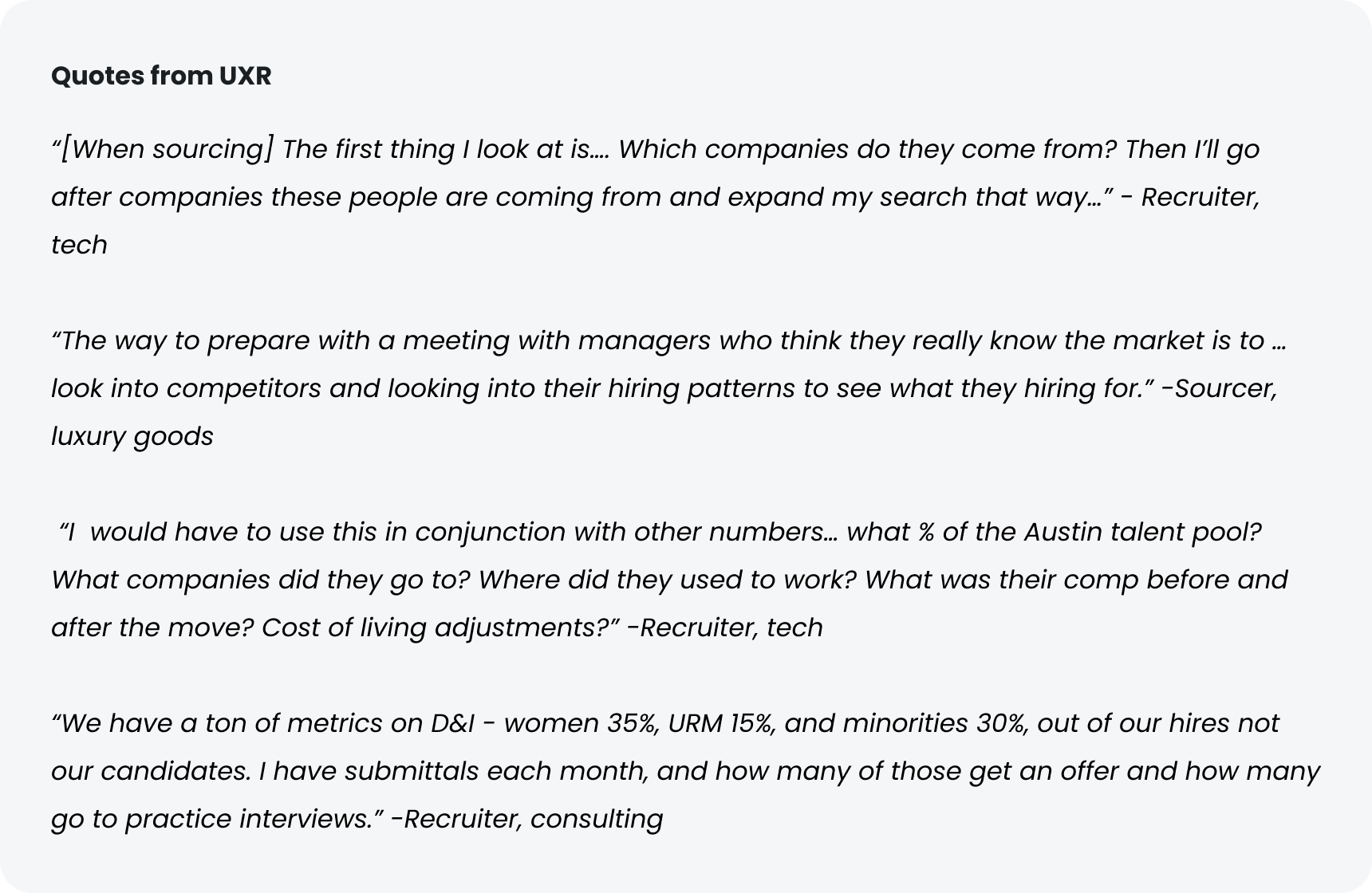
Participants didn’t know where their competitors are hiring from, but they wanted to.
Participants constantly had to manage unrealistic hiring manager expectations around “must-haves” and “nice-to-have” requirements, especially around years of experience.
Recruiters need to know where candidates are relocating to and from - so they can target the right locations in their search.
Diverse hiring was top-of-mind, but participants needed more guidance.
The recruiter’s goals for “Set strategy”:
Managing and influencing unrealistic expectations
Advocating for yourself for more time and for more resources
Hire diverse talent
Understanding where talent is located and pitching relocation
When can data and insights provide the most value?
A difficult-to-fill role
A new role or a new market
Many roles simultaneously